
How to Properly Fasten Decorations and Furnishings to the Wall
Hanging a floating shelf, wall sculpture, curtain rod or other decorative furnishing might seem like a straightforward job. But there’s one detail that’s often overlooked: the fixing supplied with the product may not be suitable for your wall.
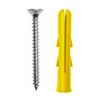
Many wall-mounted products come with a small selection of generic wall plugs and screws. While these may be perfectly adequate for some surfaces, they aren’t necessarily appropriate for every type of wall.
Choosing the right fixing for your wall is essential if you want your installation to remain secure, stable and safely supported.
The Wall You Are Fixing To Matters
Before drilling a hole, it’s important to identify what your wall is actually made from.
In Australia, many homes use Gyprock (plasterboard) for internal walls, while brick, concrete and masonry are also common. Timber framing and other construction materials may be present behind the surface.
Each type of wall requires a different approach.
Brick and Concrete Walls
The standard plastic wall plugs and screws supplied with many products are generally intended for solid masonry surfaces such as brick or concrete.
When installed correctly, the plug expands inside the drilled hole and provides an anchor for the screw.
For these types of walls, the supplied fixings may be perfectly suitable—provided they are appropriate for the load you’re intending to hang.
Always consider the weight of the item before selecting your fixing.
Timber
If you’re fastening directly into solid timber, a wall plug isn’t normally required.
The screw can be driven directly into the timber, provided the screw is appropriate for the material and the timber provides sufficient support.
However, remember that there may be electrical wiring, plumbing or other services concealed within a wall. Always take appropriate precautions before drilling.
What About Gyprock?
This is where things can become a little more complicated.
Gyprock is relatively soft compared with brick or concrete. A standard masonry wall plug inserted into plasterboard may not provide the support you need.
In some situations, the plug can simply pull out of the plasterboard under load, particularly when the item is heavy or experiences repeated movement.
This is why using the correct plasterboard fixing is so important.
Instead of automatically using the plugs supplied with the product, choose a fixing specifically designed for Gyprock or plasterboard.
Toggle Fixings
For many plasterboard applications, toggle-style fixings can provide a much more secure attachment.
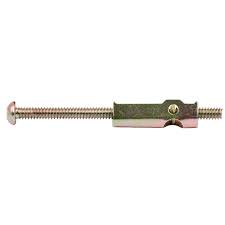
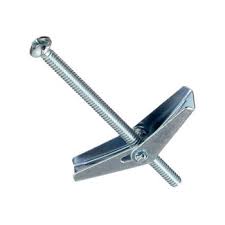
Spring toggles and gravity toggles are designed to pass through a drilled hole and then open or expand behind the plasterboard. When the screw is tightened, the fixing distributes the load over a larger area of the wall rather than relying solely on the relatively soft plasterboard.
This makes them particularly useful when there isn’t a suitable timber stud exactly where you need to mount your item.
Always select a fixing according to the weight of the item and the manufacturer’s recommended load capacity.
Nylon Plasterboard Fixings
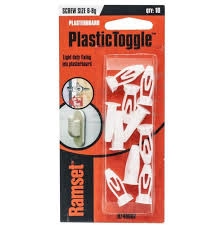
Specialised nylon fixings designed specifically for Gyprock or plasterboard can also be useful for lighter applications.
These fixings are designed to grip the plasterboard and provide considerably better holding power than a conventional masonry plug.
As with any fixing, check its load rating and make sure it is appropriate for the item you’re installing.
Find the Right Fixing for the Job
The small bag of screws and wall plugs included with a product shouldn’t necessarily be treated as a universal solution.
Before you start drilling, consider:
- What is the wall made from?
- How heavy is the item?
- Will the item experience movement or vibration?
- Is there a timber stud available where you want to mount it?
- What load is the selected fixing rated to support?
If you’re unsure, your local hardware store can help you select an appropriate fixing for your particular wall and application.
A Secure Installation Starts With the Right Fixing
A beautifully installed shelf, sculpture or furnishing is only as good as the hardware holding it in place.
Taking a few minutes to identify your wall type and choose the appropriate fixing can make the difference between a secure installation and an item that eventually works loose or damages the wall.
Choose the right fixing, install it correctly, and give your wall-mounted furnishings the support they deserve.